
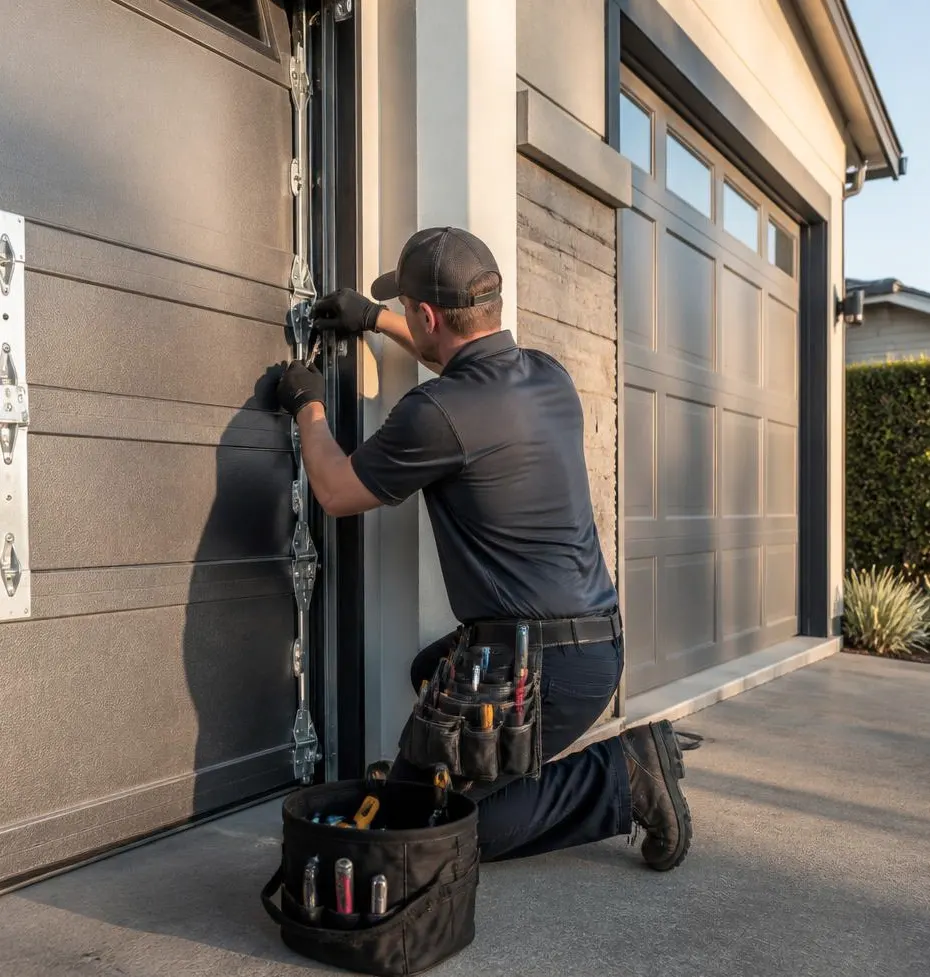
Here's what another season of "we'll deal with it later" actually costs: a residential torsion spring that snaps on a Friday night runs a few hundred dollars to replace. A commercial door that seizes mid-cycle at a shop or warehouse can shut down deliveries, trap a vehicle half in and half out of the bay, or put an employee in the path of a 400-pound section that's no longer under control. One of those is an inconvenience. The other is a liability. If you and your spouse are arguing about whether your shop door, detached garage, or small business overhead door needs the same once-a-year glance as the one on your house, here's the answer: no, and here's why.
They're Not the Same Door, Just Bigger
A residential garage door is built around convenience. It opens and closes a handful of times a day, uses torsion or extension springs sized for a lightweight door, and is made from thin-gauge steel, wood composite, or insulated panels chosen mostly for curb appeal and R-value.
A commercial or warehouse overhead door is built around cycles and abuse. These doors are rated for dozens or even hundreds of open-close cycles a day, use heavier-duty tracks and hinges, and often run on commercial-grade operators with higher horsepower and safety sensors built for constant use rather than occasional use. The springs are sized differently too — commercial systems frequently use multiple torsion springs or a jackshaft operator setup specifically because one spring failing shouldn't mean the whole door crashes down.
The Weight and Wind Factor
Commercial doors are also just heavier, often made of thicker steel or built in wider spans to fit loading docks and bay doors. That added weight and width changes how wind load, track alignment, and panel flex need to be managed. A door that's fine at 9 feet wide can behave very differently at 14 or 16 feet, especially with the gusty, wet weather that blows through this part of North Carolina during hurricane remnants and seasonal storms.
Why Maintenance Needs Diverge
This is where the argument usually gets settled. A homeowner doing a seasonal check on a residential door is mostly looking at:
- Lubricating rollers and hinges
- Checking weatherstripping for gaps
- Testing the auto-reverse safety feature
- Listening for grinding or popping sounds
A commercial door under daily heavy use needs all of that, but on a tighter schedule, plus:
- More frequent lubrication because high-cycle use burns through it faster
- Regular torque and balance checks on multiple springs, not just one
- Inspection of the operator's clutch, chain, or belt for wear from constant starts and stops
- Track and roller inspection for metal fatigue, not just dirt buildup
- Photo-eye and reversing-edge safety sensor testing, since these doors see far more foot and forklift traffic
Skipping maintenance on a residential door usually means a louder door or an eventual spring replacement. Skipping it on a commercial door means a much higher chance of a mid-cycle failure during business hours, which is both a safety issue and a revenue issue if deliveries can't move.
The Climate Variable Nobody Thinks About
Humid summers and heavy rain push moisture into any garage or bay, residential or commercial, and that moisture accelerates rust on tracks, hinges, and spring coils if they're not lubricated and wiped down. Pine pollen settles into roller tracks and gums up movement, and a door that cycles 50 times a day collects that grit far faster than one that opens twice. Occasional ice storms add another layer — a frozen track or stiff spring on a door that's only used a few times a day is annoying; the same problem on a commercial door mid-shift is a bigger disruption. Buildings near pines and damp tree cover see this faster than open, dry lots, so if your shop or garage sits in a shaded or moisture-heavy spot, shorten your inspection interval rather than stretching it.
When to Call Fuquay-Varina Garage Door
If you're running a business with a loading dock, warehouse bay, or high-use shop door, this isn't a DIY-lubrication-and-hope situation. Multiple springs under tension, heavier panels, and commercial operators carry real risk if something's adjusted wrong. Call for commercial garage door service if you're noticing uneven movement, a door that hesitates or reverses unexpectedly, or if it's simply been a while since anyone inspected the springs, cables, and tracks under load. We'll check cycle wear, spring balance, and safety sensors, and we can set up a regular garage door maintenance schedule so a failure doesn't catch you mid-delivery.
For homeowners with a detached garage or workshop door that's seeing more daily use than a typical house door, the same logic applies on a smaller scale — more cycles means more frequent checks, not the same once-a-year routine as the main garage.
Whether it's a shop door, a warehouse bay, or the door on your house, Fuquay-Varina Garage Door serves Fuquay-Varina, Holly Springs, Angier, Willow Spring, Apex, Garner, Lillington, and Cary with honest inspections and fast response when something's not right. Call us before the next storm rolls through, not after the door stops cooperating.